
Sticky labour laws and a difficult business environment have led to employers shifting their new hiring in favour of contract labour where social security is much lesser, says Mahesh Vyas.

Congress is opposing the GST bill in the current form.

IHS said low regulated gas prices have precipitated a supply shortfall in India, but proposed that reforms to the pricing formula could yield higher domestic production and boost India's economy.
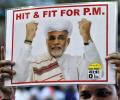
Report card of the Narendra Modi-led central government for the first six months, on the basis of ratings by top CEOs, under key parameters.

The prime minister sees himself as the "vikas purush". But realising his government's agenda for development requires not just a more efficient administration but also a credible implementation plan, says Nitin Desai.
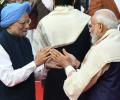
False and acrimonious debates such as Modi versus Manmohan might allow for victories that are political and partisan. But the real loser is the nation, India and Bharat, notes Arvind Subramanian, former chief economic advisor to the Modi government in its first term.
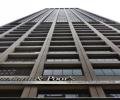
S&P in November ruled out an upgrade in the country's rating for some considerable period, citing India's low per capita GDP and relatively high fiscal deficit.

We have a government with an extremely weak economic team advising a PM who hardly pays attention to their thoughts, says Jayanta Roy.
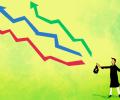
Investors' wealth soared by Rs 10.58 lakh crore in three days of the market rally, where the BSE benchmark jumped over 2 per cent, and hit an all-time high on Monday. Extending its winning momentum to the third day running, the 30-share BSE Sensex jumped 363.20 points or 0.49 per cent to settle at 74,014.55. During the day, it zoomed 603.27 points or 0.81 per cent to hit its record high of 74,254.62.

As the United Progressive Alliance government desperately fights the perception of a policy paralysis, Finance Minister Pranab Mukherjee dismisses it with equal vehemence contending that the coalition was set on achieving higher economic growth.

If Mr Modi and his team expect to win the 2019 elections, groundwork for improved performance in their second term should be done now.

Chief Economic Adviser Arvind Subramanian on Thursday said upgrading of India's outlook to positive by Moody's validates the government's reform thrust.

The memoranda of understanding were signed during a day-long 2nd India-China Strategic Economic Dialogue in New Delhi.

A total of Rs 30,000 crore was allocated for five years to Air India by the United Progressive Alliance government in its second term.

The outlook is improving and that mostly reflects the fact that the new government has pledged to prioritise economic reforms.

Modi govt has a unique style of working, say experts.
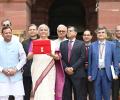
With the reality of coalition politics staring the BJP in its face, this was inevitable, points out Ramesh Menon.

Foreign portfolio investors (FPI) have pulled out $3.5 billion from India's equity markets so far this month. The selling comes on the back of election-induced volatility and the rotation of flows from India to China, where stocks are available at half the valuations. If the selling pressure remains at the current level, this will be the highest FPI pullout since January 2023.
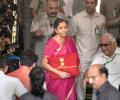
'The household sector, which is still the largest contributor of financial savings, has been experiencing a decline in the last six years, and it has fallen below 8% of GDP.'

'Investors should ideally consider equity allocations from a medium-to-long term perspective.'

Is it is necessary to play divisive politics to succeed in the next general elections? asks Dr Sudhir Bisht.
RBI said more monetary transmission to support growth continues to be critical.

Of the eight RBI governors who have held office since the 1991 economic liberalisation, Bimal Jalan had the longest stint and S Venkitaramanan, the shortest. Current Governor Shaktikanta Das will overtake Bimal Jalan before completing his second term in December, points out Tamal Bandyopadhyay.
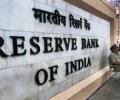
The Reserve Bank of India is likely to cut policy rates by 0.25 per cent and keep the cash reserve ratio unchanged at its policy review next week, on the back of slower-than-expected growth and more encouraging inflation readings, says a report by HSBC.

Subdued exports remain an area of concern.

The BJP is the preferred choice because it offers what the Mughals and later British offered in their time: A stable polity and an environment in which business could function, explains T N Ninan.

Riding on a bull run, equity investors became richer by Rs 128.77 lakh crore in the 2023-24 fiscal, driven by robust fundamentals of the Indian economy, increased investment inflows and promising corporate earnings. After a muted performance in 2022-23, equity markets made a remarkable recovery in FY24, giving handsome returns to investors. The 30-share BSE Sensex climbed 14,659.83 points or 24.85 per cent in 2023-24.

Finance Minister Arun Jaitley will pitch for quota and governance reforms in the annual meeting of the International Monetary Fund.

'Like Nehru, too, Modi has found dealing with Beijing more and more difficult and has adopted an increasingly assertive approach towards managing India's northern neighbour.'
Opposition as well as UPA allies are in a mood to declare war on the Congress-led government on the FDI and fuel price issue, reports Renu Mittal

The Economic Survey called for improving business environment.

'All of Indira Gandhi's bad economic ideas are being strengthened, from nationalised banks to anti-poverty, handout yojanas,' says Shekhar Gupta.
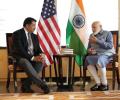
They discussed at length India's rapid progress in the space sector, including various space exploration missions being undertaken by India, the Ministry of External Affairs said in a press release.

Prime Minister Narendra Modi has met leading American economist Paul Romer, investor and co-founder of hedge fund, Bridgewater Associates Ray Dalio, and other eminent thought leaders and exchanged views with them and briefed them about the reform trajectory of his government to foster economic growth. Prime Minister Modi is in New York on the first leg of his maiden state visit to the US at the invitation of President Joe Biden. Modi and Romer held discussions on India's digital journey, including the use of Aadhaar and innovative tools like Digilocker.
The agreement is subject to approval by the IMF management and consideration by its executive board, which is expected in early April.

The Indian stock markets may turn bearish after the US Fed decides to raise interest rates.

The absence of a clear underlying economic ideology in the Budget was quite evident, say experts.
Dismissing fears of a slowdown, Finance Minister Pranab Mukherjee on Monday said India's growth drivers are intact and the Centre is committed to policy reforms.

China has relaxed its one-child policy and further freed up markets in order to put the world's second-largest economy on a more stable footing.
